
THE RETAIL MEDIA TAKEOVER: HOW AMAZON IS QUIETLY DISMANTLING THE DSP OLIGARCHY
A Data-Backed Strategic Briefing on the Budget Shift Reshaping Digital Advertising—and Why Your Agency Hasn’t Told You Yet.
Your Marketing Budget Is Abandoning The Trade Desk. Is Your Team?
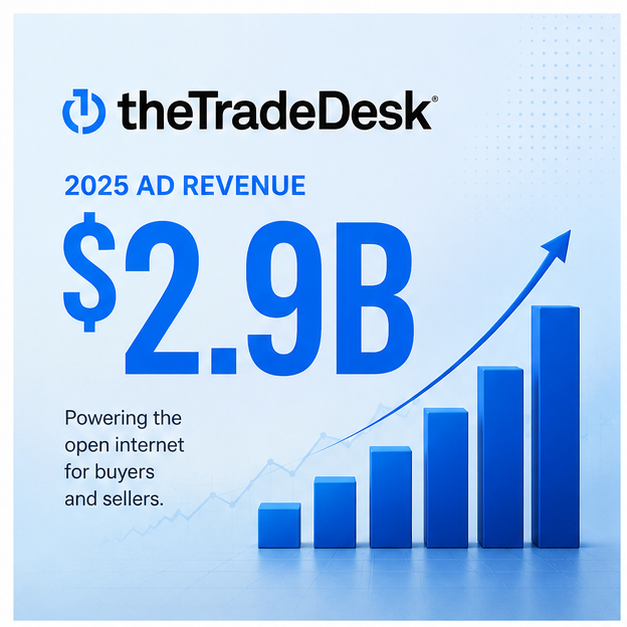
The Trade Desk is still winning the narrative. $2.9 billion in 2025 revenue. 47% margins. The golden child of programmatic. Untouchable, right?
Wrong.
Beneath the earnings calls and analyst praise, something is quietly breaking. Agencies—the same ones singing The Trade Desk’s praises in public—are dividing their bets. Some call it hedging. The more honest ones call it defection.
A London agency director recently admitted what everyone in the room already knew: their Trade Desk spend kept pace with rising CTV budgets, but barely. Meanwhile, their competitors captured the real growth. “Amazon DSP owns the conversation now,” he said. “Because it owns the whole stack.”
The numbers don’t lie: Some estimates suggest that Amazon controls up to 77% of digital retail media advertising spending in the United States. Let that sink in.
The evidence isn’t dramatic—which is exactly why it’s working. New features appear in standard agreements that once required six-figure minimums. Measurement credits materialize with fewer strings attached. Account teams cycle through three rotations in a year. Features, credits, continuity—all the fraying edges of a platform losing grip.
No agency has formally left The Trade Desk. But they’ve all opened back doors to somewhere else. The network is diversifying. The bets are spreading. The future is hedging.
This isn’t a story about The Trade Desk failing. It’s a story about a new player building something traditional DSPs simply cannot replicate.
The Three-Part Stranglehold No Competitor Can Match
Amazon didn’t invent retail media networks. It just weaponized them in ways that make everyone else look like amateurs.
Three structural advantages. That’s all it takes. And Amazon owns all three.
The raw power: Amazon captured 77% of retail media spend in 2025. It pulled in $56.2 billion in advertising revenue in 2024. Not marginal growth. Dominance.
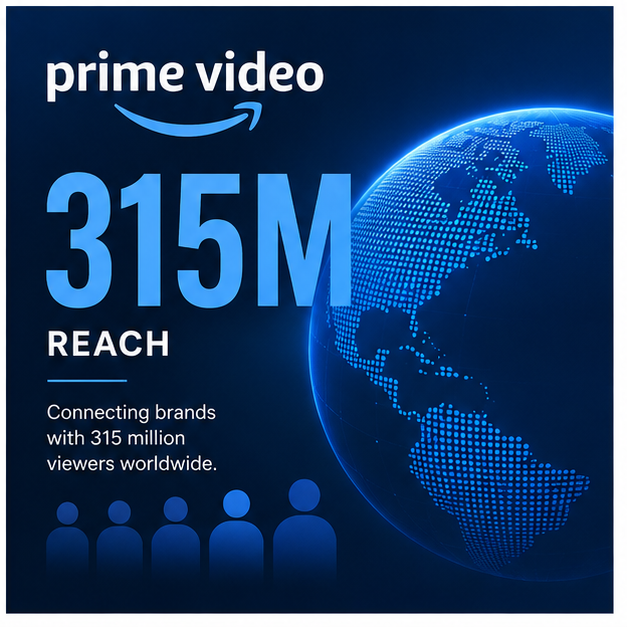
Prime Video is the accelerant. In January 2024, Amazon made its move: ads on Prime. Within 18 months, 315 million viewers across 16 countries. A 57.5% surge in under two years. CTV is the fastest-growing premium inventory category on the planet, and Amazon just locked down the premium audience.
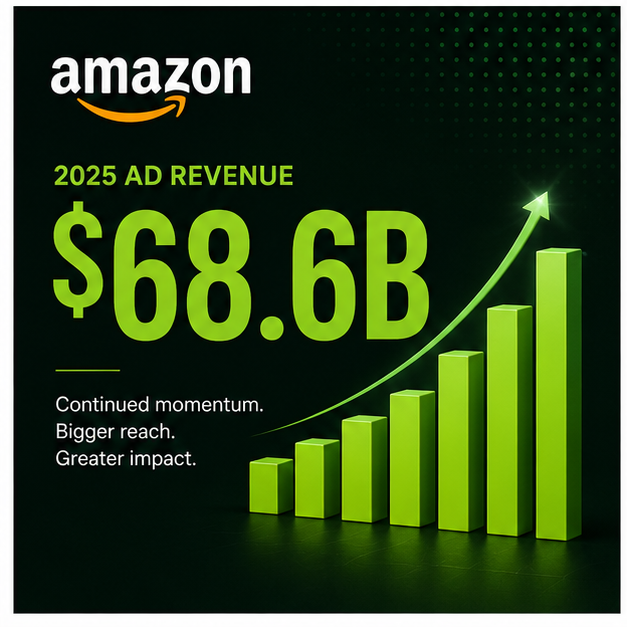
Amazon’s Q4 2025 numbers? $21.3 billion in ad revenue—23% growth year-over-year. Full-year total: $68.6 billion. Prime Video represents around 19% of that intake. The remaining revenue flows through retail media and DSP channels in a single, integrated ecosystem. This isn’t a side business. This is the core.
Here’s what Amazon actually owns:
First: Your Customer Data. Amazon knows what your customers search for. What they add to carts. What they buy. What they return. This isn’t behavioral guessing. This is a transactional fact. When a brand runs a campaign on Amazon retail media, the outcome isn’t inferred from pixels or third-party data. It’s measured directly against actual purchases.
Second: The Premium Inventory You Can’t Access. The Trade Desk brokers access to inventory. Amazon owns it. The streaming audience. The search feed. The shopping interface. Prime Video placements command premium CPMs that make programmatic remnants look like pennies. And Amazon bundles that premium inventory with authenticated, transactional audiences that nobody else can touch.
Third: Attribution That Actually Works. When a brand activates audiences on Prime Video through Amazon DSP, the data flows directly back into Amazon’s measurement engine. No guessing. No statistical modeling. Just causality: 47,000 units sold as a direct result of this campaign. Your CFO doesn’t have to squint at dashboard noise. They see revenue.

Traditional DSPs have sophisticated algorithms. They have scale. They have publisher relationships. What they don’t have is access to the end of the customer journey. The Trade Desk sees impressions. Amazon sees transactions. In a world where every dollar must justify itself against measurable outcomes, that gap is fatal.
Walmart is trying to replicate the model—28% year-over-year ad revenue growth is impressive. Target’s Roundel is in double-digit growth territory. Solid. But neither has Amazon’s stack integration. More than 80% of top retailers now operate retail media networks. The field is crowded. Amazon is just pulling further ahead.
The Measurement Crisis Reshaping Budget Allocation
The death of third-party cookies didn’t just change tracking. It rewrote the entire ROI calculation.
Here’s the problem: most marketers struggle to determine which channels deserve credit for conversions. That’s not a minor problem. That’s mass-scale budget hemorrhaging.
McKinsey ran the numbers. Companies using first-party data effectively? They’re seeing 5-8X higher ROI than their competitors running generic campaigns. Not twice as good. Eight times. They’re also increasing revenue by 15% while cutting spending by 20%—simultaneously. That’s not optimization. That’s a different business model.
The cost of failing to fix this: We’ve seen clients misallocate up to 30% of a marketing budget. For a brand spending $50 million annually? That’s $15 million going to channels that underperform. Every year. Year after year.
Forrester dug into first-party data adoption and found it improves customer acquisition costs by 83%. Customer satisfaction by 78%. Brand awareness by 75%. Conversion by 73%. ROI by 72%. These metrics don’t move in isolation. They swing together when your foundation shifts from guessing to knowing.
The contrast is stark:
Legacy DSP Attribution: A brand runs a programmatic campaign. Impressions fire. Some clicks register. Some conversions get attributed via pixels. The majority of the path to purchase disappears. Often, more than half of attributions remain undefined. The marketer shrugs and moves on.
Amazon Retail Media Attribution: A campaign launches. The audience is authenticated. Every interaction flows into Amazon’s measurement system. Revenue is linked directly to spend. No unknowns. Full transparency.
For CFOs, this difference is worth billions in annual optimization. Proximic’s 2024 survey shows it plainly: contextual targeting and first-party data are now the top strategies marketers plan to deploy. This isn’t aspirational. This is table stakes.
The implication is brutal: budgets migrate toward channels where measurement is certain. Channels that can’t prove outcome hemorrhage funding. Channels with transactional data monopolize growth.
Media Teams Are Already Restructuring
The budget shift isn’t theoretical. It’s reshaping how teams operate right now.
Many organizations still operate with a “DSP team” siloed from a “retail media team.” This structure made sense in 2019 when programmatic was everything and retail media was emerging. In 2026, it’s an albatross.
The winning structure is already emerging:
Tier 1 (60-70% of budget): Amazon Advertising (retail + Prime Video), Walmart Connect, Target Roundel, Kroger. Why? Closed-loop measurement. Transactional data. Highest attribution confidence.
Tier 2 (25-35% of budget): The Trade Desk, Google DV360. Why? Fill reach and frequency gaps. Contextual targeting for upper-funnel awareness. Everything else the Tier 1 channels don’t cover.
Tier 3 (5-10% of budget): Specialty retail media, niche SSPs. Why? Hyper-targeted, high-intent audiences for specific categories.
Walmart’s advertising revenue grew 28% year-over-year. Target’s Roundel is in double-digit growth. These aren’t side projects. They’re core revenue engines.
Now for the hard part: skill sets.
Most media teams lack depth in all three critical areas:
- Retail Media Mastery: Product feed optimization, sponsored product ads, shopper intent signals, category-level measurement. Most teams fake this.
- DSP and Programmatic Fluency: Audience targeting, bid optimization, cross-channel planning, publisher relationships. This you probably have.
- Direct Publisher Relationships: Premium placement negotiation, publisher first-party data strategies, relationship management with emerging advertising businesses. Almost nobody has this yet.
Organizations restructuring around these three capabilities are extracting real value from media budgets. Organizations that don’t are watching dollars migrate to better-structured competitors. It’s happening now.
How to Audit and Reallocate Before Your Competitors Do
Stop waiting for perfect clarity. The framework you need already exist.
Four diagnostic questions:
Question 1: Measurement Confidence. Rate each channel 1-10. Channels below 5? Reallocation candidates. Channels 8+? Your foundation.
Question 2: Audience Overlap. Which audiences appear in both retail media and DSP? What’s the CPM + CAC comparison? If retail media is more efficient for overlapping segments, that’s your first move.
Question 3: Campaign Objective Mapping. Which channels own awareness? Which enable consideration? Where’s transactional intent highest? Map accordingly. Spoiler: retail media wins conversion almost every time.
Question 4: Competitive Positioning. Are your top three competitors already heavy into retail media? If yes, accelerate. If not, be methodical. Either way, move.
The execution:
- Step 1: Current State Audit (what are you actually spending?)
- Step 2: Measurement Confidence Scoring (what can you actually measure?)
- Step 3: Audience Overlap Analysis (where do you have redundancy?)
- Step 4: Campaign Objective Mapping (which channels fit which goals?)
- Step 5: Competitive Intelligence (what are rivals doing?)
- Step 6: Reallocation Roadmap (Year 1: move 20%. Year 2: move 40-50%. Year 3: move to 60-70%)
The data backs this up: Over 50% of US brands now use retail media for upper-funnel objectives. Harvard Business Review’s 2024 study found optimized shopping ads close up to 65% of final sales. These aren’t supplementary channels. They’re core.
The First-Mover Advantage Is Compounding in Real Time
Here’s what’s happening to early movers: they’re pulling away.
Companies that started building first-party data infrastructure in 2025 have a 5-10 year head start on competitors who wait. That’s not hype. That’s structural mathematics.
The compounding works two ways:
Learning Velocity: Brands allocated to retail media are running hundreds of experiments per quarter. Brands still 80% programmatic? 10-15 experiments max. The learning gap is 10X. That gap doesn’t close. It expands.
Data Network Effects: Amazon’s model improves as participation grows. More advertiser spend = more data = better models = better targeting = higher ROI. This network effect benefits early participants. Waiting puts you further behind, not closer to parity.
McKinsey quantified it: a 10% improvement in targeting efficiency, compounded over a decade, creates dramatically different market positions and competitive outcomes. For most brands, retail media represents a 10-30% efficiency gain right now.
The market itself is validating this play: $26.17 billion in 2025 growing to $100.67 billion by 2035. A 14.42% CAGR. This isn’t an emerging channel. This is the central nervous system of digital advertising being rebuilt in real time.
Brands waiting until 2027 or 2028 aren’t being conservative. They’re being expensive. The question isn’t whether to move. The question is when. For most organizations, the answer is now. For some, it’s already too late.